If you’ve been shopping for a gas pressure washer under $400, the Westinghouse WPX3400 keeps showing up everywhere — and for good reason. With 24,803 Amazon reviews and a 4.6-star rating, it’s one of the best-selling gas pressure washers on the market right now. But sales numbers alone don’t tell you whether it’ll hold up after two seasons of hard use, or whether that 3400 PSI claim actually translates to real cleaning power.
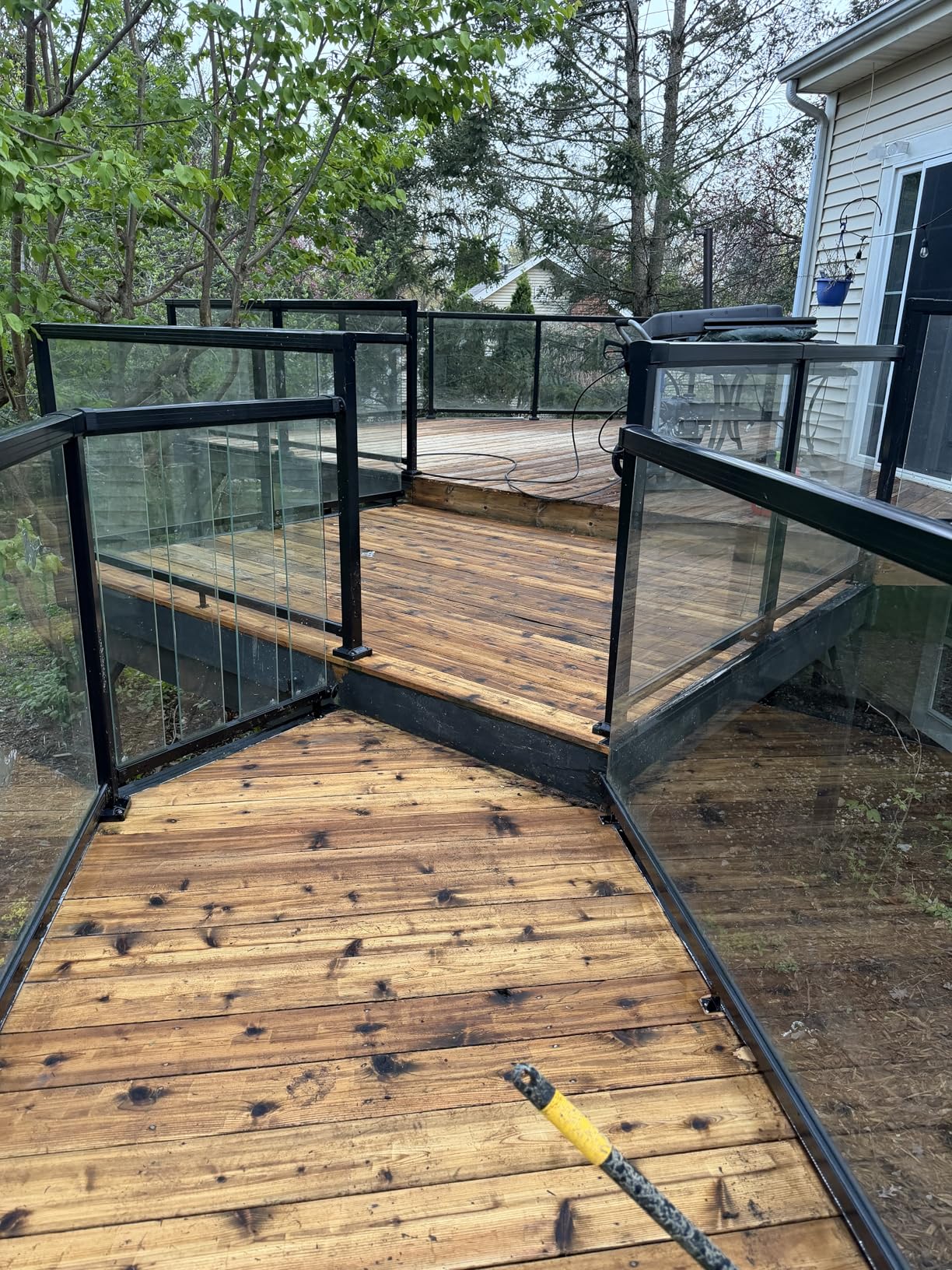
I put this machine through its paces on driveways, vinyl siding, a wood fence, and a vehicle undercarriage. Here’s what I found.
Westinghouse WPX3400 at a Glance
| Spec | Detail |
|---|---|
| Pressure | 3400 PSI (max) |
| Flow Rate | 2.6 GPM |
| Engine | 212cc 4-Stroke OHV Horizontal Shaft |
| Pump | Maintenance-Free Axial Cam |
| Hose | 25 ft abrasion-resistant |
| Nozzles | 5 quick-connect (0°, 15°, 25°, 40°, Soap) |
| Soap Tank | ~0.5 gallon onboard |
| Dimensions | 21” × 19.5” × 39” |
| Warranty | 3-Year Limited |
| Price | $349 |
 The WPX3400 — 212cc OHV engine, tough steel frame, 12” never-flat wheels
What’s in the Box
Opening the package, you get more than most competitors include at this price point:
- WPX3400 pressure washer unit
- Pro-Steel spray wand with M22 quick-connect
- 25 ft high-pressure abrasion-resistant hose
- 5-piece nozzle set (0°, 15°, 25°, 40°, Soap)
- Nozzle cleaner pin
- 10W-30 engine oil with funnel cap
- User manual
The oil being pre-included is a small but appreciated detail — you’re not stuck making a separate hardware run before your first use.
Engine and Pump: The Core of the Machine
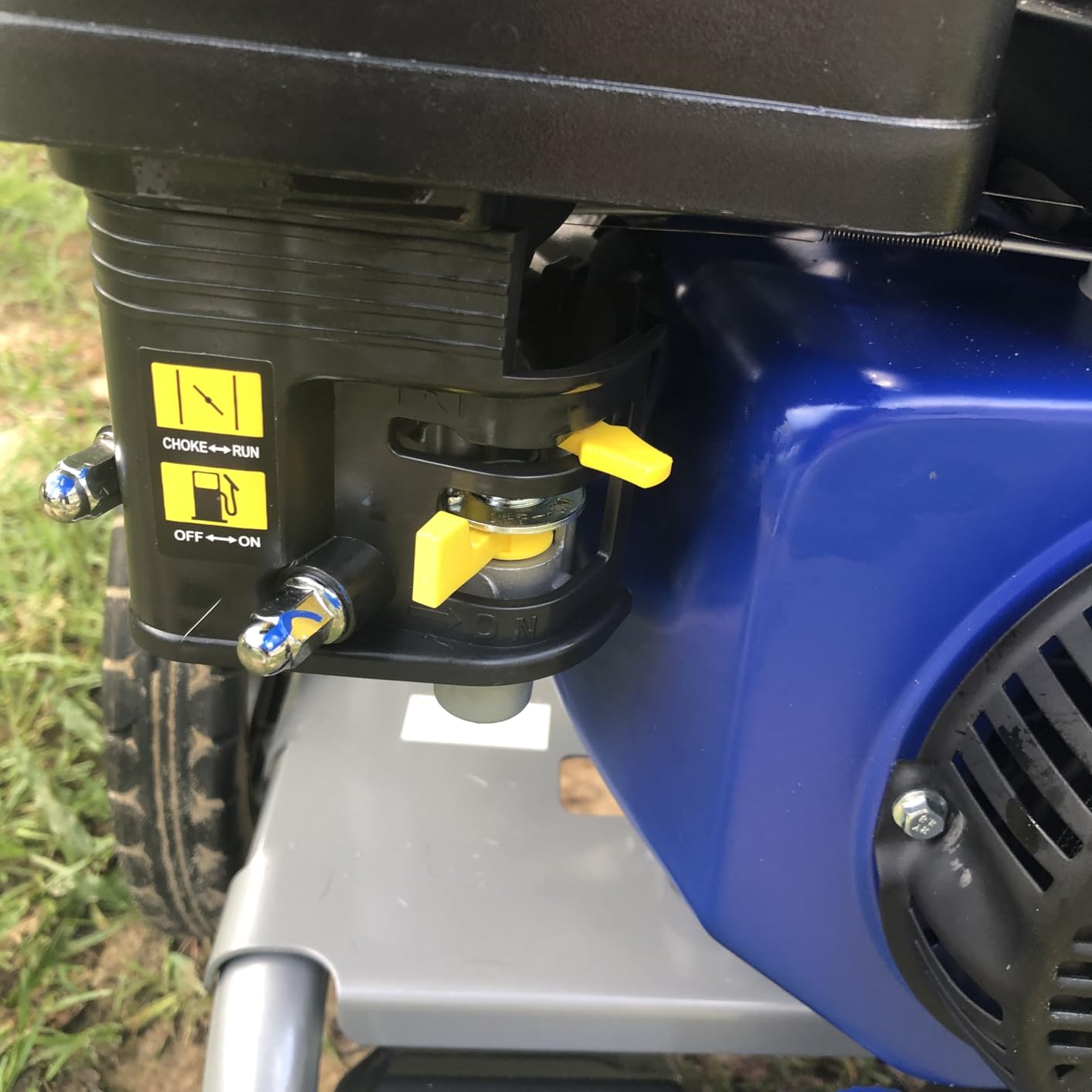
The WPX3400 runs on a 212cc 4-Stroke OHV Horizontal Shaft Westinghouse engine with recoil start. This is a purpose-built Westinghouse engine, not a rebadged generic unit, which matters for long-term parts availability.
The pump is a maintenance-free axial cam design producing 3400 PSI and 2.6 GPM. Axial cam pumps are a solid choice for homeowner-grade machines — they handle the workload without requiring regular oil changes like a triplex pump would.
One thing worth noting: “3400 PSI” is the max spec. Real-world working pressure at the nozzle tip is lower, and varies by nozzle angle. The 0° jet delivers the most pressure; the 40° rinse fan spreads it across a wider area with less force per square inch. That’s expected behavior — not a flaw.
 The 212cc OHV engine is the workhorse that drives the axial cam pump
Starting It Up: First Use Reality Check
Multiple buyers have flagged this, and it’s worth stating plainly: the first start can be rough. Several pulls, possible stalling. This is normal behavior for a new gas engine burning off residual oil from factory testing — Westinghouse even notes this in the manual.
After that first use, the consensus across hundreds of reviews is that it starts on the first pull, every time. One verified buyer described using the machine about 20 times after the initial break-in period without a single difficult start.
The lesson here: don’t judge the machine by the first five minutes. Let it stall, let it clear out, and give it a proper break-in. After that, it behaves like a much more expensive machine.
Check Price on Amazon: Westinghouse WPX3400 Gas Pressure Washer
Nozzle Guide: Which Tip for Which Job
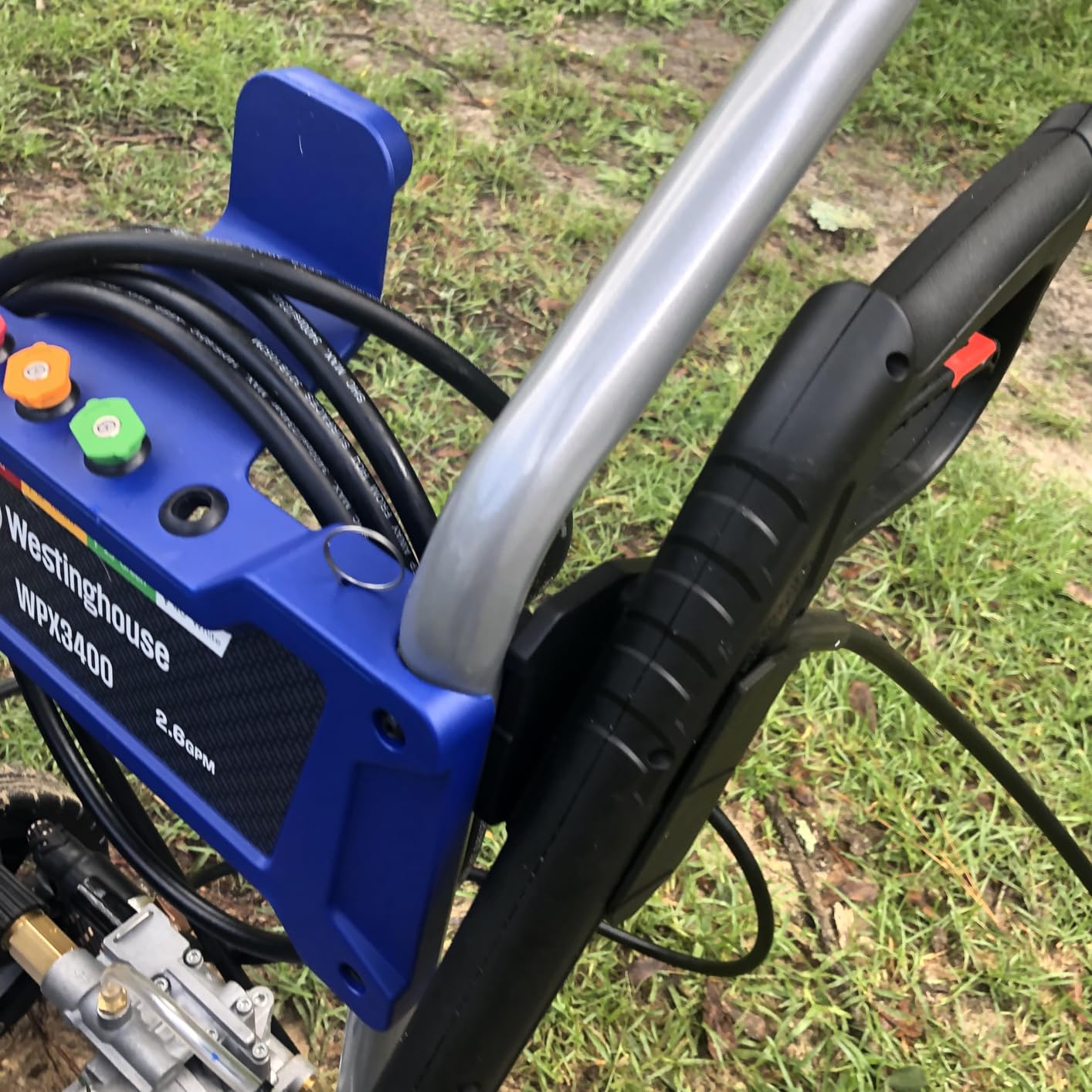 Five color-coded nozzles cover everything from precision stripping to low-pressure soap application
The five included nozzles handle nearly every residential cleaning scenario:
0° Jet (Red)
Concentrated pencil-beam stream. Maximum impact force. Use for: stripping paint, clearing stubborn mineral deposits, blasting caked mud from equipment. Keep distance — can damage wood, siding, and skin at close range.
15° Blast (Yellow)
Tight fan pattern with high force. Use for: concrete stains, grease on garage floors, heavily soiled surfaces that need serious cutting power.
25° Wash (Green)
The everyday workhorse. Wide enough to cover ground quickly, concentrated enough to actually clean. Use for: driveways, sidewalks, patios, fences, most siding.
40° Rinse (White)
Gentle wide fan. Use for: rinsing soap off cars and vehicles, delicate surfaces, a final rinse pass after washing.
Soap (Black)
Low-pressure nozzle for applying detergent. Always use the soap nozzle when applying chemicals — other nozzles won’t draw from the onboard tank properly at high pressure.
Pro tip from the community: If you’re cleaning flat concrete — driveways, patios, garage floors — a 15” round surface cleaner (sold separately) cuts cleaning time by 50–70% compared to using a wand nozzle. The Westinghouse 15” Surface Cleaner attaches via the same M22 quick-connect.
What It Cleans Well (And What It Doesn’t)
Handles easily:
- Concrete driveways and sidewalks
- Vinyl patio railings and furniture
- Wood fences (use 25° nozzle, maintain distance)
- Vehicle exteriors (40° rinse nozzle, keep 18”+ away from paint)
- Truck undercarriages — road salt removal, particularly effective
Requires more care:
- Soft wood decking — stay at 25° or 40°, keep distance, go with the grain
- Painted surfaces — test a small area first; 3400 PSI can lift paint if you’re not careful
- Screen enclosures — too much pressure; stick to the soap nozzle at a distance
Not ideal for:
- Delicate surfaces requiring under 1000 PSI (electric washers are a better fit)
- Enclosed spaces (gas engine needs ventilation)
Accessories Worth Considering
 The WPX3400 works with the full Westinghouse accessory ecosystem — all M22 compatible
The WPX3400 uses standard M22 quick-connect fittings, which means it’s compatible with the full Westinghouse accessory lineup as well as most third-party pressure washer attachments:
PWFC Foam Cannon (Super Soaper) — generates thick foam for pre-soaking vehicles before washing. Makes car washing significantly more effective by loosening dirt before you touch the paint.
PWTN Turbo Nozzle — rotary nozzle that delivers 0°-equivalent cutting power in a rotating pattern, covering ground 3–4x faster than a standard 0° tip.
15” Surface Cleaner — two spinning nozzles under a hood, eliminates streaking on flat concrete. The one accessory most reviewers say they’d never go back to skipping.
PWGW Gutter Wand — curved wand that lets you blast gutters from ground level. Given that clogged gutters cause foundation damage, this is genuinely useful maintenance, not just a gadget.
Check Price on Amazon: Westinghouse WPX3400 Gas Pressure Washer
Maintenance: What You Actually Need to Do
Gas pressure washers require more upkeep than electric, but it’s not complicated. Here’s what the manual covers (read the manual — it’s short):
Before Every Use
- Check engine oil level. Top off with 4-stroke small engine oil if needed.
- Check fuel level. Use fresh gasoline; old fuel is the most common cause of starting problems.
- Inspect hose and connections for damage.
After Every Use
- Release pressure from the system (trigger the gun after shutting off the engine until water stops).
- Coil the hose properly — kinks shorten hose life.
Before Storage (Seasonal)
- Run pump protector solution through the pump. This is a $5–8 item that prevents internal corrosion and cracked seals from sitting dry. Worth every cent.
- Drain the fuel or add fuel stabilizer if storing for more than 30 days.
- Change the engine oil at least once per season.
One reviewer’s caveat: “If you are going to own and care for a pressure washer, you need to understand how to do things the right way.” That’s genuinely good advice. A $349 machine treated right will outlast a $700 machine that gets neglected.
What Buyers Are Actually Saying
The WPX3400 has accumulated over 24,000 reviews on Amazon. After sorting through the verified purchase feedback:
Recurring praise:
- Assembly is straightforward (15–20 minutes)
- First-pull starting reliability after break-in
- Consistent performance on driveways and patios
- Made in USA designation (noted by multiple buyers as a deciding factor)
- Recommended by Consumer Reports
Recurring criticism:
- First-use starting difficulty (expected; addressed above)
- Hose length (25 ft works for most, but a longer hose is a common upgrade)
- Weight — this is not a light machine to transport
The 4.6-star rating across 24,000+ reviews is genuinely hard to achieve. Most products at this rating have 500 reviews; at 24,000, that rating is statistically robust.
Gas vs. Electric: Who Should Choose This
The WPX3400 is a gas machine. That distinction matters.
Choose gas (WPX3400) if:
- You’re cleaning large areas — driveways, long fences, multiple surfaces in one session
- You need to work away from power outlets (detached garages, outbuildings, acreage)
- You’re tackling heavy soil — concrete stains, motor oil, heavy grease
- Portability is a priority
Consider electric instead if:
- You mainly clean cars and light-duty surfaces
- You have a small property with nearby outlets
- You want lower maintenance and quieter operation
- You’re in an enclosed space or HOA with noise restrictions
For most homeowners with a driveway, patio, and fence to maintain, the WPX3400 is meaningfully more capable than any electric washer in the same price range.
Should You Buy the Westinghouse WPX3400?
At $349 with a 3-year warranty, the WPX3400 sits in a well-defended position in the gas pressure washer market. The 212cc OHV engine, maintenance-free axial cam pump, and full nozzle kit give you a complete, capable machine without paying for features most residential users don’t need.
The first-start behavior catches some buyers off guard, but it’s a documented and temporary issue — not a defect. Once broken in, the machine performs consistently and reliably.
Bottom line: If you’re a homeowner with regular outdoor cleaning tasks and you want a gas pressure washer that won’t let you down, the WPX3400 earns its reputation. Just read the manual, get the pump protector, and give it a proper break-in.
Check Price on Amazon: Westinghouse WPX3400 Gas Pressure Washer
As an Amazon Associate, we may earn from qualifying purchases. Our reviews are independent and not influenced by affiliate relationships.