The SIMPSON PS3228 PowerShot occupies a useful position in the gas pressure washer market: strong enough to handle driveways, brick, fencing, siding, and equipment cleaning, yet compact enough to fit in a standard garage without a trailer setup. At 3300 PSI and 2.5 GPM, paired with a Honda GX200 engine and AAA triplex pump, it sits well above entry-level machines while stopping short of full commercial territory.
This review covers real performance expectations, the nozzle system, maintenance requirements, and who this washer is actually right for — and who should look elsewhere.
As an Amazon Associate, we may earn from qualifying purchases.
Quick Verdict
The PS3228 makes the most sense for homeowners and light-commercial users who need a durable, gasoline-powered machine for repeated heavy cleaning. The Honda GX200 engine and AAA triplex pump are the two reasons to choose this over a cheaper gas washer — both are proven components that hold up under regular use when maintained properly.
It is not a machine for everyone. At around 75 lb, it takes some effort to move. It runs on gasoline, requires oil checks, produces engine noise, and is not for sale in California per current compliance notes. For light seasonal rinsing or apartment-scale jobs, it is more machine than you need. For a long driveway, stained concrete, wood fencing, or a garage floor that sees real work, it is the right kind of tool.
Key Specifications
| Feature | Detail |
|---|---|
| Maximum pressure | 3300 PSI |
| Maximum flow rate | 2.5 GPM |
| Engine | Honda GX200 |
| Pump | AAA triplex plunger pump |
| Hose | 25 ft MorFlex high-pressure |
| Hose connection | Threaded M22 |
| Nozzles | 0°, 15°, 25°, 40°, Soap |
| Spray gun | Rear-load M22 with 16-inch wand |
| Tires | 10-inch premium pneumatic |
| Frame | Welded steel, powder-coated |
| Dimensions | 34 in L × 21 in W × 24 in H |
| Weight | ~75 lb |
| Compliance | 49-state (not available in California) |

What 3300 PSI and 2.5 GPM actually means
PSI is the force at the nozzle tip. GPM is the volume of water the machine moves per minute. A machine with strong pressure but weak flow can feel aggressive but slow — it concentrates force on a small area without carrying much volume to flush debris away. The PS3228’s 2.5 GPM keeps water moving fast enough that you spend less time going over the same section twice.
For context: most electric pressure washers sold in the same price range produce 1500–2000 PSI at 1.2–1.6 GPM. The gap is noticeable the moment you point both at the same concrete stain.
Build and First Impressions
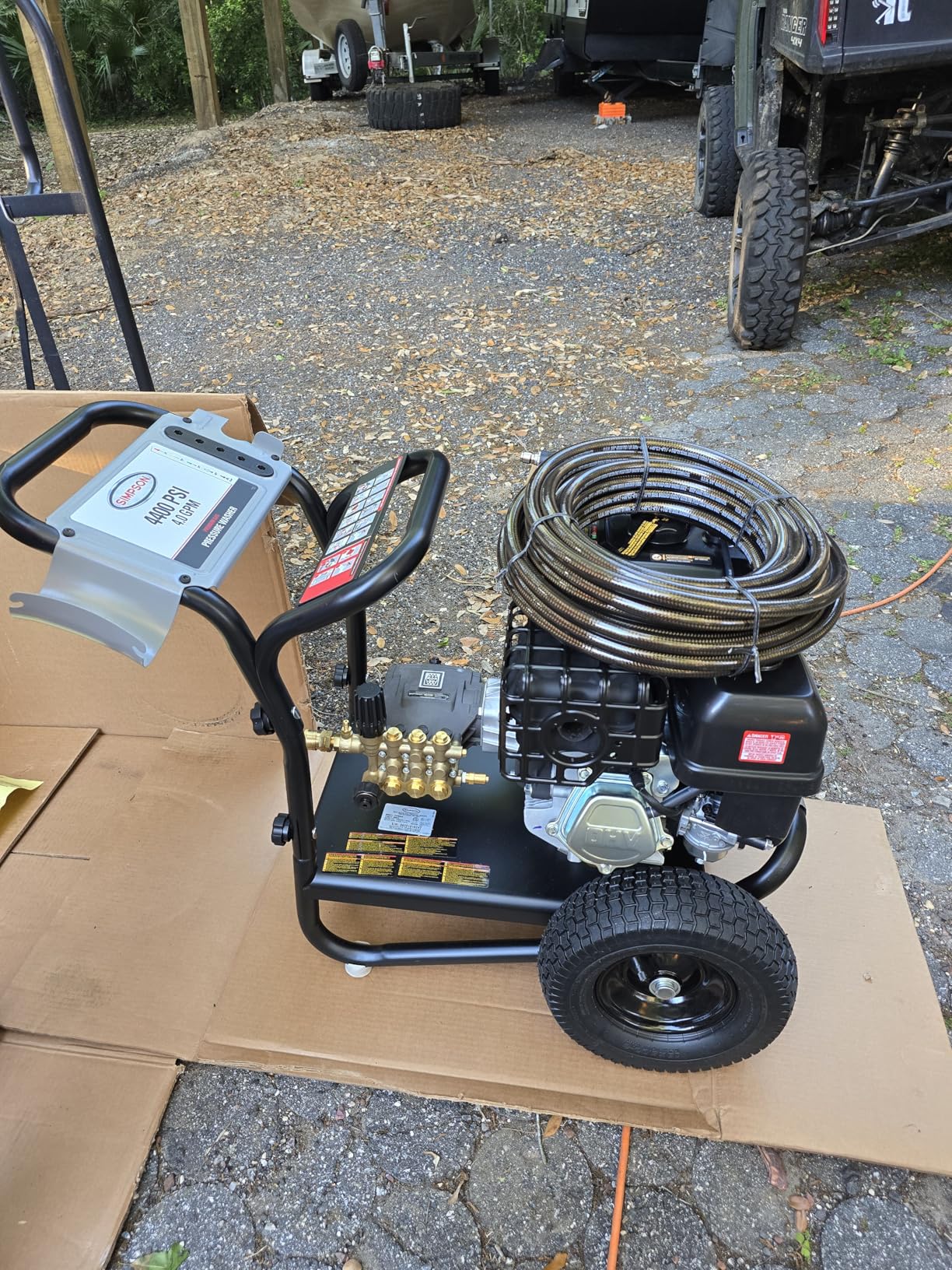
The frame is low and wide, with the engine and pump sitting inside a protective steel tube structure. The wide stance keeps it from tipping when the hose pulls sideways, which matters more than it sounds after an hour of walking the machine around a driveway. The 10-inch pneumatic tires roll cleanly over gravel, lawn edges, and rough concrete — a real improvement over the hard plastic wheels common on lighter machines.

The welded steel frame with powder-coated finish handles the abuse of outdoor work better than most plastic-frame alternatives. Vibration, water exposure, dragging around corners — this is a frame built for repeated use, not occasional weekend rinses.
The Honda GX200 engine includes low-oil shutdown. That feature will not replace checking oil before each job, but it prevents the most common and expensive form of small-engine damage: running the motor until it seizes.
Setup and Starting
Assembly is minimal — the handle may need attaching depending on how the unit ships. Beyond that: add engine oil if not already filled, connect the garden hose, attach the spray wand, select the correct nozzle, turn on water fully, squeeze the trigger until water flows steadily (this purges air from the line), then start the engine per the manual.

The purge step matters. Running the pump without water flowing can cause pump damage. Make it a habit before every pull of the starter cord.
Starting behavior is straightforward once the engine is broken in. Multiple long-term owners report first-pull starts after the break-in period. Like any carbureted gas engine, it benefits from fresh fuel and proper choke technique — old fuel sitting in the tank over winter is the most common cause of hard starting.
Check Price on Amazon: Simpson Cleaning PS60869 PowerShot 4000 PSI Gas Pressure Washer
Nozzle Guide: Which Tip for Which Surface

The five included nozzles cover the full range of residential and light-commercial cleaning scenarios. Choosing the wrong nozzle — or using the right nozzle too close — is where most surface damage happens.
0° jet (red)
A concentrated pencil-beam stream at maximum pressure. Use it for specific hard-surface tasks: removing paint from metal, clearing clogged drain channels, stripping stubborn mineral scale. Keep it well away from wood, vinyl, siding, painted surfaces, and skin. This is not a general-purpose nozzle.
15° blast (yellow)
A tight fan with high force. Best suited to tough stains on concrete, brick, and stone — garage floors, oil spots on driveways, algae on masonry.
25° wash (green)
The everyday nozzle. Wide enough to cover ground efficiently, concentrated enough to actually clean. Driveways, sidewalks, patios, wood fencing (from a safe distance), and most outdoor surfaces.
40° rinse (white)
A gentle wide fan for siding, cars, and delicate surfaces. Also the right choice for a final rinse pass to clear soap residue without stripping anything.
Soap (black)
A low-pressure nozzle for applying detergent through the siphon system. This is the only nozzle that draws soap from the tank — high-pressure nozzles create too much backpressure for the siphon to work. Apply soap with the black nozzle, let it dwell, then switch to a cleaning nozzle to rinse.
Starting distance rule: Begin further away than you think you need to be. Move closer only after you see how the surface responds. This applies to every nozzle, especially with a 3300 PSI machine.
Cleaning Performance
Concrete, driveways, and garage floors
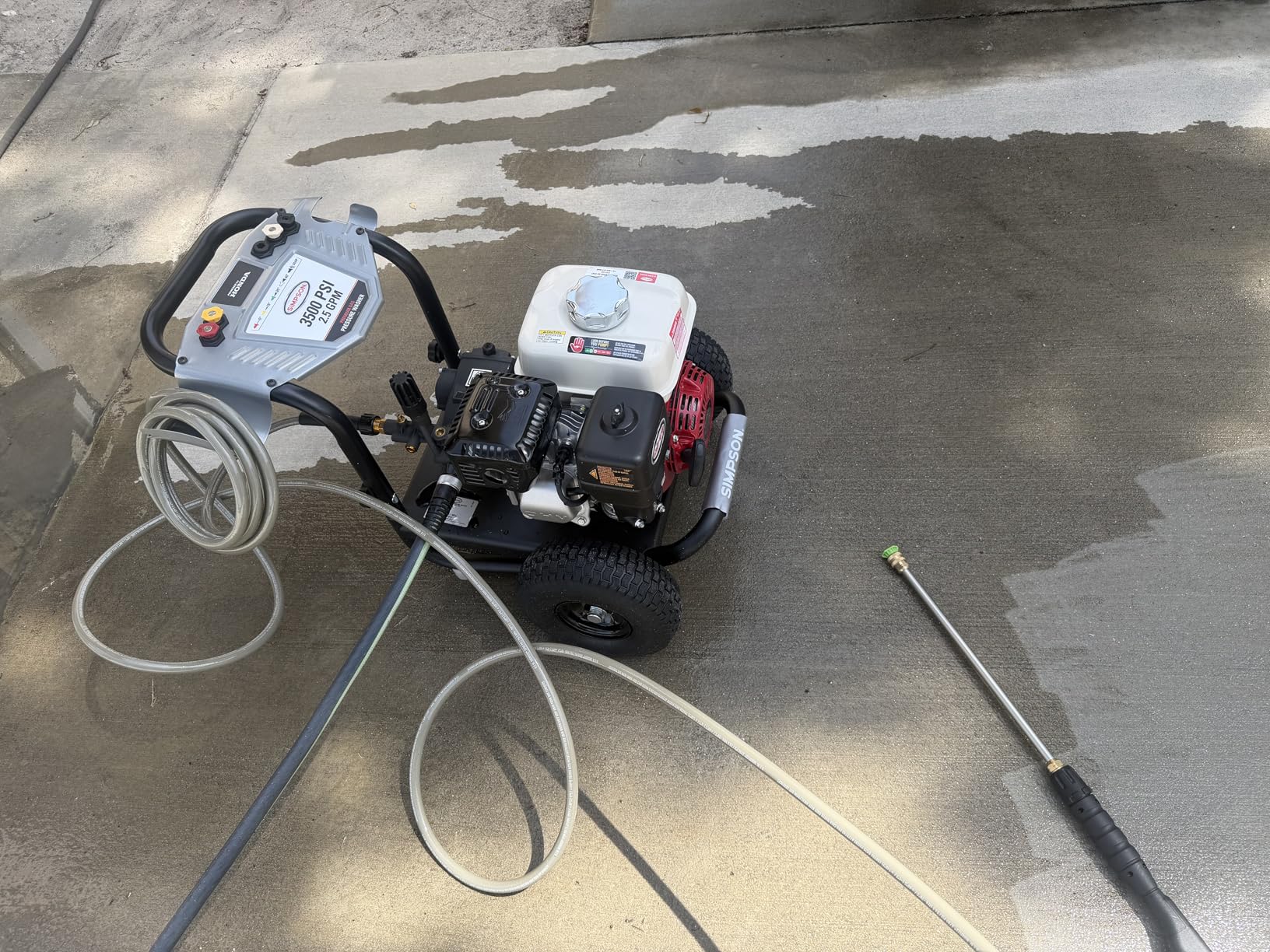
This is where the PS3228 does its best work. Embedded dirt, oil drips, moss, and year-old staining that a light-duty electric machine would take multiple passes to shift comes off much faster at 3300 PSI and 2.5 GPM. For large flat areas, a compatible surface cleaner attachment reduces streaking and cuts total cleaning time significantly — it is not included, but worth adding if driveways are your main use case.
Fencing and wood
Wood needs more caution than concrete. The PS3228 can raise grain, splinter soft wood, or leave pressure marks if the nozzle is too close or the spray angle too aggressive. Start with the 25° or 40° nozzle from at least 18 inches away, test a small inconspicuous section first, and go with the grain. Detergent and dwell time reduce the need to blast the surface hard — use the soap nozzle, let it sit for a few minutes, then rinse.
Siding and house exterior
Enough pressure for siding, but technique matters more than power. Use the 40° white nozzle, maintain distance from the wall, and avoid directing water behind siding seams, window frames, vents, and old caulking. Work from bottom to top when applying soap, top to bottom when rinsing. Forcing water into gaps causes moisture problems that show up months later.
Equipment and outdoor structures
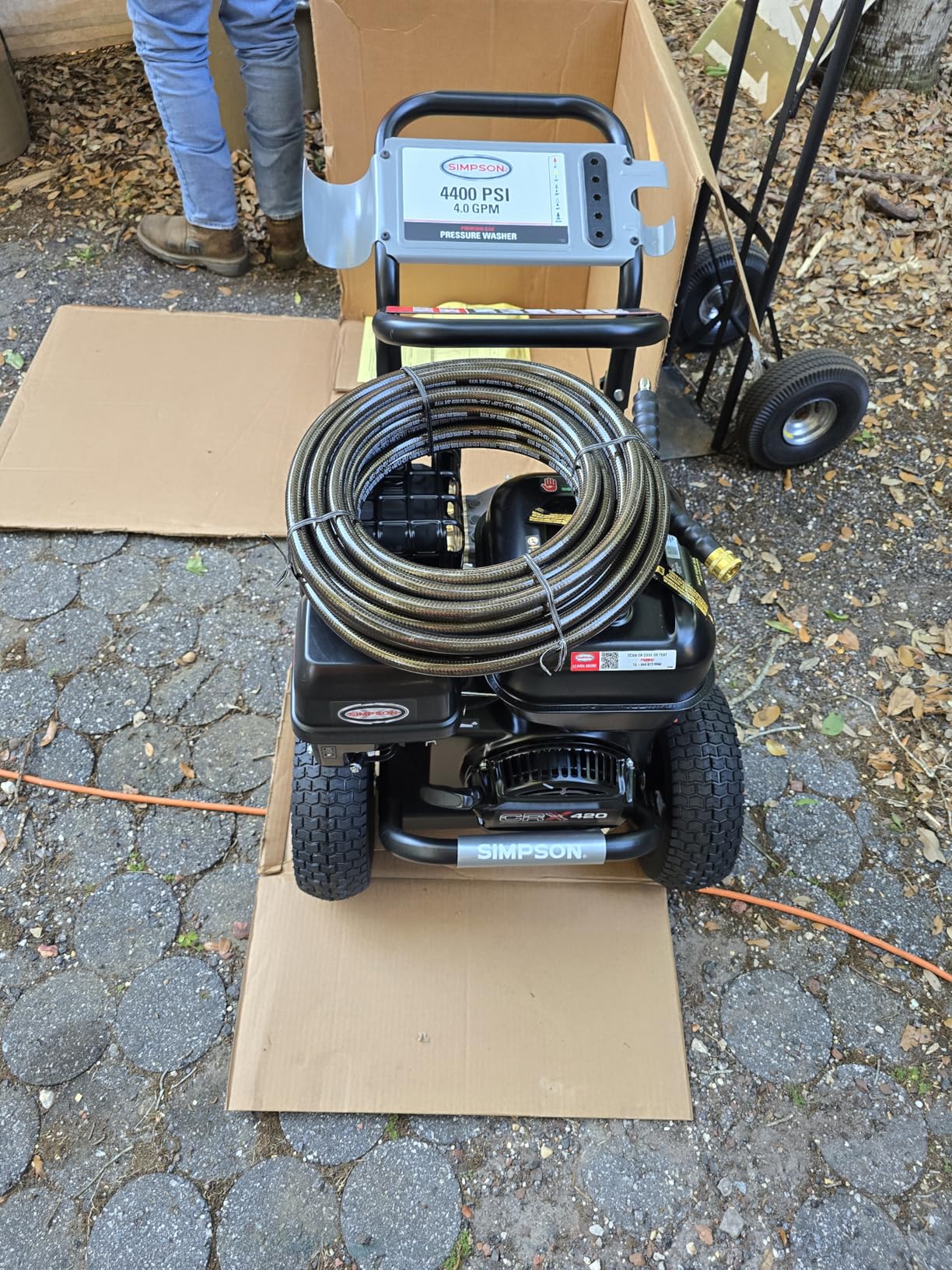
The gasoline-powered design means the PS3228 can go wherever the cleaning job is — no outlet required, no 50-foot extension cord debate. For tractors, trailers, ATVs, and outdoor power equipment, the portability combined with 3300 PSI makes short work of caked mud and road grime. One practical note: this is a cold-water machine. Heavy grease responds better to a dedicated degreaser with dwell time than to high-pressure water alone — use both together.
Mobility and Controls
The 10-inch pneumatic tires are a practical choice. Hard plastic wheels get stuck in gravel, chatter on rough concrete, and catch on lawn edges. Pneumatic tires roll over most outdoor terrain without drama. The low cart-style frame is stable enough that pulling the hose sideways does not tip the machine — an issue that affects taller, narrower pressure washer designs.
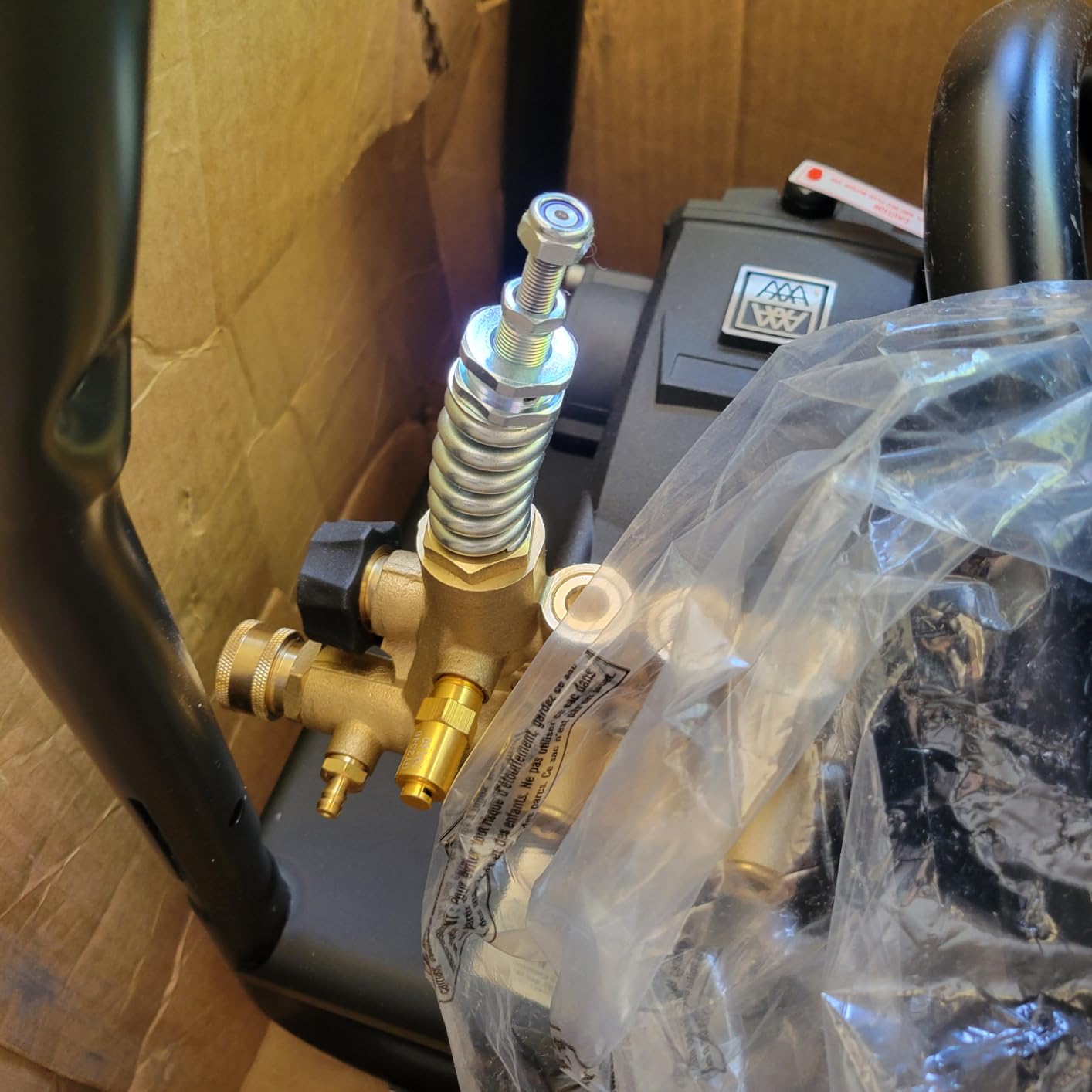
There are no digital controls, no app, no pressure selection dial. Pressure is managed through nozzle choice and spray distance. The pump includes an unloader valve that diverts water internally when the trigger is released, which protects the pump during brief pauses. That said, do not let the machine run unattended for extended periods without spraying — heat builds in the pump during bypass mode.
Fuel and Maintenance
Owning a gas pressure washer requires more ongoing attention than an electric machine. None of it is complicated, but skipping it shortens the machine’s life.
Before every use
- Check engine oil. Top off with the correct grade if needed.
- Use fresh gasoline. Fuel older than 30 days is the most common cause of starting and running problems.
- Connect the water supply before starting. Never run the pump dry.
After every use
- Release pressure by squeezing the trigger after shutting off the engine.
- Flush detergent from the system with clean water after soap jobs.
- Coil the hose without kinks.
Seasonal storage
- Run pump protector solution through the pump before storing for the season. This prevents internal corrosion and seal damage from moisture sitting inside the pump.
- Drain the fuel or add fuel stabilizer for storage periods longer than 30 days.
- Change engine oil at least once per season, or per the manual’s schedule.
- In cold climates, make sure no water remains in the pump before freezing temperatures arrive.
Pump and hose longevity
The AAA triplex pump is a genuine advantage over the axial cam pumps found in many similarly priced machines. Triplex pumps run cooler, are more serviceable, and typically last longer under regular use. Actual life depends heavily on proper care — particularly keeping water flowing before starting, flushing soap after use, and winterizing before storage.
M22 connections and quick-connect nozzle tips are standard across the pressure washer industry, which makes finding replacement hoses, guns, and nozzles straightforward.
Check Price on Amazon: Simpson Cleaning PS60869 PowerShot 4000 PSI Gas Pressure Washer
What Works Well
The power-to-size ratio is the headline. At 3300 PSI and 2.5 GPM in a frame that still fits a standard parking space, the PS3228 avoids the awkward middle ground where machines are big enough to be inconvenient but not powerful enough to justify the size.

The Honda GX200 engine is a known quantity. It is not the cheapest engine option, but it has a long track record for starting reliability and longevity when maintained. For buyers who have had bad experiences with no-name engines on cheaper pressure washers, the Honda is a meaningful upgrade.
The AAA triplex pump, the 10-inch pneumatic tires, and the welded steel frame are all choices that favor durability over lowest possible cost. They add weight and price, but they also make the machine a better long-term investment for anyone who will use it regularly.
The nozzle set is complete. Five tips cover aggressive spot work through gentle soap application, so first-job coverage is good without additional purchases.
Where It Falls Short
Weight is the main limitation for many buyers. Around 75 lb is manageable on flat ground with the wheels doing their job, but loading it into a truck bed alone, carrying it down steps, or storing it on an elevated shelf takes more planning than a lighter electric machine.
The 25-foot hose covers small and medium areas but requires repositioning the machine for long driveways, full-house siding jobs, or working around large vehicles. Many owners eventually add a longer hose.
Gas equipment is louder than electric and requires gasoline handling, exhaust ventilation, and more storage preparation. Buyers switching from electric should expect a different ownership experience, not just a more powerful version of what they already have.
The warranty details in available materials are inconsistent — one source shows limited warranty periods for engine, pump, and frame, while another shows “No Warranty.” Confirm current warranty terms directly with the seller before purchasing.
Who Should Buy It
The PS3228 suits buyers who have real, recurring outdoor cleaning work and want a machine that can handle it for multiple seasons without replacement.

Good fits include homeowners with large concrete areas, stained driveways, brick walkways, wood fencing, garages, or regular equipment cleaning. It also works well for property managers handling multiple units, mobile detailers who understand pressure limits for vehicle surfaces, and small contractors who need a portable cold-water machine without a trailer.
The Honda engine and triplex pump combination appeals to buyers who have owned cheaper washers and want to step up to components with a better reliability track record.
Who Should Skip It
Skip it if your cleaning tasks are light — rinsing patio chairs, washing bicycles, cleaning a small balcony. A compact electric pressure washer is quieter, lighter, cheaper to run, and far simpler to maintain for that kind of work.
Also skip it if you cannot safely store gasoline equipment, if your area has noise restrictions that make gas engines impractical, or if you are in California, where this unit is not currently available for sale.
Buyers who need built-in electric start, hot-water capability, onboard detergent metering, or very long hose reach for multi-story buildings should look at equipment designed specifically for those requirements.
Final Verdict
The SIMPSON PS3228 PowerShot is a well-matched machine for buyers who genuinely need what it offers: 3300 PSI, 2.5 GPM, a Honda GX200 engine, a triplex pump, and a durable steel frame in a package compact enough for home storage.
Its strengths are real — the engine and pump choices, the mobility, the complete nozzle set — and its limitations are predictable: weight, fuel requirements, maintenance overhead, and a 25-foot hose that works for most but not all jobs.
For serious driveway cleaning, fencing, siding, garage floors, and outdoor equipment, the PS3228 has the right kind of power and the right core components. Buy it if the work you have justifies it and you are willing to maintain it properly. Look elsewhere if your cleaning needs are lighter or your storage situation is complicated.
FAQ
Is the SIMPSON PS3228 good for driveways?
Yes. The 3300 PSI and 2.5 GPM output makes it well suited for concrete driveways, sidewalks, and garage floors. For large flat surfaces, a compatible surface cleaner attachment reduces streaking and speeds up the job significantly.
Can the PS3228 clean siding?
Yes, with the right technique. Use the 40° white nozzle, maintain distance from the wall, and avoid pushing water into seams, window frames, vents, and old caulking. Power is not the issue — technique is.
Is 3300 PSI too much for home use?
Not for concrete, brick, and heavily soiled outdoor surfaces. It can be too much for soft wood, painted surfaces, and delicate materials if used carelessly. The correct nozzle and safe starting distance are what separate good results from surface damage.
Does the SIMPSON PS3228 use a Honda engine?
Yes. The PS3228 includes a Honda GX200 engine with low-oil shutdown.
What nozzles come with the PS3228?
Five quick-connect tips: 0°, 15°, 25°, 40°, and soap. These cover aggressive spot cleaning, general washing, wide rinsing, and detergent application.
Is the 25-foot hose long enough?
For small and medium jobs, yes. For long driveways, full-house siding, or large properties, a compatible longer hose is a common and practical upgrade.
Can I use detergent with this pressure washer?
Yes. The siphon system draws detergent when the soap nozzle is attached. Use pressure-washer-safe detergent only, and flush the system with clean water after every soap job.
Check Price on Amazon: Simpson Cleaning PS60869 PowerShot 4000 PSI Gas Pressure Washer
Is the SIMPSON PS3228 worth the price?
For buyers who need repeated heavy outdoor cleaning and value the Honda engine and triplex pump combination, yes. For light cleaning tasks, it is more machine than needed and an electric pressure washer is a better fit.